
Fresh Water Production Even When the Engine Is Stopped: How PETER TABOADA RO Water Makers Support Onboard Water Security
PETER TABOADA RO water makers produce fresh water without relying on a heat source. They help reduce onboard water-supply risk during long anchorage, delayed bunkering, route disruption, and other operational uncertainties.
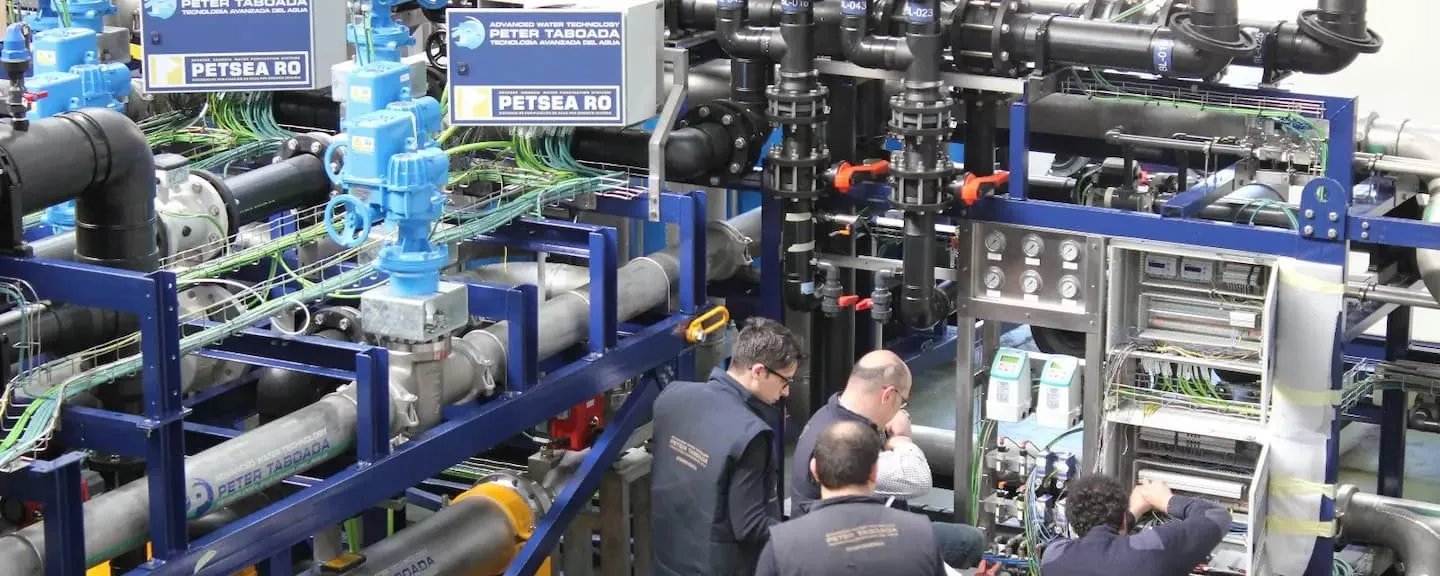
Securing fresh water onboard is essential for protecting crew living conditions. Drinking water, cooking, washing, showers, cleaning, and other daily needs all require a stable supply of fresh water.
In normal operations, vessels secure fresh water through port supply or onboard water-making equipment. In recent years, however, port congestion, long anchorage, route changes, and geopolitical risks have made delayed water supply a more realistic operational concern.
One solution attracting attention is PETER TABOADA’s reverse osmosis (RO) water maker.
RO Water Making Without Engine Waste Heat
An RO water maker produces fresh water by pressurizing seawater through an RO membrane, removing salt and impurities. Because it does not require a heat source, it can produce fresh water even when the engine is stopped, as long as power and seawater supply are available.
This is a major advantage when a vessel faces long anchorage or an extended port stay. Being able to control part of the fresh-water supply onboard, instead of relying only on external replenishment, gives operators greater resilience.
Difference From Evaporator-Type Water Makers
Evaporator-type water makers have long been used onboard ships. They use main-engine waste heat, steam, or other heat sources to evaporate seawater and then condense the vapor into fresh water.
This method is effective while the main engine is running. During port stays or anchorage, however, sufficient heat may not be available, which can restrict water production when the engine is not operating.
PETER TABOADA’s RO water maker uses pressure and membrane separation rather than heat. It does not depend on main-engine waste heat, making it easier to use during port stays and anchorage.
Preparing for Long Anchorage and Delayed Water Supply
RO water makers are useful in situations such as:
- Long anchorage with the main engine stopped
- Delayed water supply due to extended offshore waiting
- Restricted access to water-supply ports
- Energy-saving operations where waste heat is limited
- Emergency situations where fresh water must be secured onboard
When fresh-water tank levels are low, a shortage of domestic water can directly affect crew hygiene and living conditions. PETER TABOADA’s RO water maker helps reduce onboard water-supply risk as a countermeasure against replenishment delays and geopolitical uncertainty.
Easier Installation and Flexible Capacity Planning
Compared with evaporator-type systems, RO water makers have a simpler equipment configuration and do not depend on heat-source equipment. Depending on vessel conditions, this can make installation costs easier to control and make the system easier to consider for retrofit or renewal projects.
It is also easier to select a model according to the required water-production capacity. This supports rational planning based on vessel type, crew size, and operating profile. Operators can adjust running time and production volume according to onboard tank levels and consumption, securing the amount of fresh water needed when it is needed.
Main Lineup
PETER TABOADA offers a range of models and series for different requirements.
| Model | Production Capacity | Dimensions (L×W×H) |
|---|---|---|
| SW-Y 20/34 | 3.4 m³/day | 1205×365×725 |
| SW-Y 40/50 | 5 m³/day | 1280×395×750 |
| SW-Y 130/150 | 15 m³/day | 1375×580×1200 |
| SW 300 | 30 m³/day | 2800×950×1900 |
| SW 1000 | 100 m³/day | 3890×1200×2150 |
A Practical Measure for Future Onboard Water Security
Fresh-water security is becoming more important not only for normal operations, but also as preparation for unexpected port stays, long anchorage, route restrictions, supply delays, and geopolitical risks.
PETER TABOADA’s RO water maker has a clear advantage over evaporator-type systems because it can produce water without relying on heat and can operate even when the engine is stopped. Its cost advantages and flexible production-capacity planning also make it suitable for a wide range of vessel types and operating profiles.
As preparation for long anchorage and delayed water supply, and as equipment that helps reduce onboard water-supply risk, PETER TABOADA’s RO water maker is a practical option.